
NIGCOMSAT UNDER SCRUTINY: SATELLITE CONTRACTS, ₦236 MILLION SPENDING, STAFF GRIEVANCES AND NIGERIA’S LOST ORBITAL PRIORITY
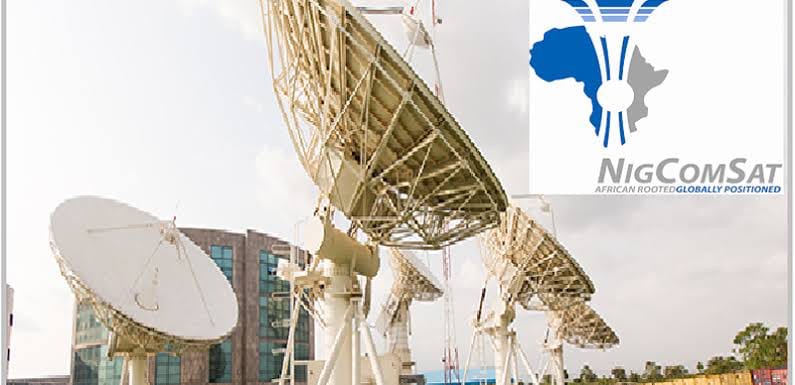
Questions mount over procurement, public expenditure, staff welfare and governance as Nigeria prepares for the next generation of communications satellites
The Nigerian Communications Satellite Limited, NIGCOMSAT, is facing a growing series of questions over its management of public resources, internal administration and the procurement of Nigeria’s next generation of communications satellites.
The questions come at a particularly sensitive time for the government owned satellite company, which is preparing for the deployment of NIGCOMSAT 2A and 2B while the country simultaneously confronts regulatory, financial and institutional issues surrounding its satellite programme.
Recent reports by BusinessDay, SaharaReporters and Secrets Reporters, together with complaints and documents attributed to current and former employees, have raised questions concerning satellite procurement, orbital coordination, expenditure outside the company’s traditional technical activities, staff welfare, promotion procedures, asset disposal and corporate governance.
NIGCOMSAT has rejected allegations that its satellite procurement process was compromised, insisting that the exercise was conducted competitively and in accordance with applicable procurement requirements.
What remains is for the relevant records and oversight institutions to establish the facts.
THE SATELLITE COMPANY AT THE CENTRE OF THE CONTROVERSY
NIGCOMSAT is Nigeria’s government owned satellite operator and a strategic component of the country’s digital infrastructure.
Its activities cover satellite communications, broadband, broadcasting, transponder services, navigation and other satellite enabled services. Its infrastructure also has applications for government communications and other strategic national requirements.
The importance of the company means that questions about its management extend beyond an ordinary corporate dispute.
They involve public funds, national infrastructure, government procurement, technology policy and Nigeria’s long term position in the international satellite communications industry.
Since the appointment of Jane Egerton Idehen as Managing Director and Chief Executive Officer in 2023, concerns have been raised by stakeholders in the national and international space ecosystem, as well as some current and former employees, about aspects of the company’s administration and internal processes.
A document reviewed for this report records complaints concerning staff reimbursements, promotion procedures, procurement decisions, disciplinary actions, union relations and governance.
THE ₦236 MILLION QUESTION
One of the most striking allegations concerns expenditures of approximately ₦236.25 million by NIGCOMSAT on projects described as including youth empowerment, ICT related activities, road construction and renovation of a community hall.
An investigation by Secrets Reporters alleged that NIGCOMSAT made payments totalling ₦236,252,505.83 through eight transactions to five companies for various projects.
The report identified projects in Rivers State and Lagos, including road construction in Elenlenwo, Obio Akpor, Rivers State, and the renovation and furnishing of a community hall in Orogbum, Rivers State.
The investigation questioned whether such expenditure fell within NIGCOMSAT’s statutory and corporate mandate.
The issue, however, is not simply whether a government owned technology company can support community development.
The critical questions are whether the projects were:
• contained in an approved budget;
• authorised under an approved programme;
• part of an approved corporate social responsibility initiative;
• procured in accordance with applicable rules;
• properly delivered;
• supported by completion certificates and payment records; and
• connected to an identifiable NIGCOMSAT corporate objective.
The payment vouchers, procurement records and approval documents would provide the clearest answer.
As of the publication of the Secrets Reporters investigation, the publication said it had not received a response from the Managing Director concerning the expenditure.
STAFF WHO SAY THEY PAID FROM THEIR POCKETS
The controversy extends beyond procurement.
Several employees have reportedly complained about delayed reimbursement of expenses incurred while undertaking official assignments.
According to accounts contained in documents reviewed for this report, some employees allegedly financed official local and international travel personally and subsequently experienced delays in recovering the money. One employee was quoted as saying that continued borrowing to finance official travel had become unsustainable.
Another complaint concerned unpaid shift allowances.
The material reviewed records allegations that some employees had been required to carry financial burdens associated with official duties while waiting for reimbursement.
This raise questions about NIGCOMSAT’s travel advance, reimbursement and staff welfare procedures.
NIGCOMSAT management has acknowledged broader financial and administrative challenges.
In its September 2026 response, management stated that it inherited a salary structure that had not been reviewed for 17 years and that steps had been initiated towards a review through the appropriate government approval processes.
Management also stated that it was addressing outstanding obligations relating to official assignments and strengthening reimbursement procedures.
THE ANTHONY ORJINTA CASE
Another issue raised by staff concerns the late Engr Anthony Orjinta, described by colleagues as an experienced engineer.
According to accounts reviewed for this report, employees alleged that money owed to Mr Orjinta remained outstanding for an extended period and that part of the amount was reportedly paid shortly before his death.
Some colleagues subsequently questioned whether earlier payment could have affected his access to medical care.
The wider institutional issue remains whether legitimate financial obligations to employees are settled within a reasonable period.
NIGCOMSAT 2A AND 2B: THE BIG PROCUREMENT QUESTION
The most consequential issue concerns the procurement of the NIGCOMSAT 2A and 2B satellites.
Nigeria is investing in new satellite infrastructure as the country prepares to transition from the existing NIGCOMSAT 1R platform, that is due to complete it end of life in 2027.
BusinessDay reported on September 23 that documents it reviewed raised questions concerning the procurement and security approval trail surrounding the new satellite programme.
According to the report, an August 2025 Federal Executive Council memorandum provided for the acquisition of two communications satellites through a financing structure involving 49 percent Federal Government participation and 51 percent private investors.
However, BusinessDay reported that the memorandum did not identify Thales Alenia Space or Israel Aerospace Industries as the selected vendors.
That raises a straightforward question:
At what point, and under what procurement authority, were the eventual contractors selected?
BusinessDay also reported that the House of Representatives Committee on Digital and Communication Technology directed NIGCOMSAT in May 2026 to cancel a planned facility tour involving executives of Israel Aerospace Industries.
The newspaper reported that the committee sought clarification concerning Bureau of Public Procurement approval, budgetary provisions, and security implications.
These issues are significant because the satellite programme involves not only commercial technology but also strategic national infrastructure.
NIGCOMSAT’S RESPONSE
NIGCOMSAT has rejected suggestions that the procurement process was manipulated or designed to favour particular contractors.
In an official statement published in September 2026, the company said the procurement process for NIGCOMSAT 2A and 2B was conducted professionally, competitively and transparently in accordance with applicable procurement laws and BPP procedures.
Management said all participating bidders were evaluated using the same technical, financial and compliance requirements.
The company also rejected suggestions that the selection of a particular bidder could be determined by performance in isolated aspects of the evaluation, arguing that the final decision considered the complete evaluation framework, including technical responsiveness, financial compliance, delivery capability, project risk, security considerations and long term value.
The questions can ultimately be tested against the procurement record. The evaluation criteria, scores, procurement approvals, BPP documentation, committee reports and contract award records should establish how the process was conducted and how the final decisions were reached.
THE OLD BPP CERTIFICATE
Another issue raised in the BusinessDay investigation concerns a 2012 Bureau of Public Procurement Certificate of No Objection.
According to BusinessDay, the certificate related to an earlier NIGCOMSAT 2 and NIGCOMSAT 3 procurement involving China Great Wall Industry Corporation, with a reported value of approximately $691.387 million.
That was a different procurement involving a different contractor and financing structure.
BusinessDay reported allegations that the old certificate may have been relied upon in connection with the current programme, while also making clear that the documents reviewed by the newspaper did not independently establish that NIGCOMSAT used the 2012 certificate as procurement clearance for the present IAI engagement.
This distinction is important.
A previous procurement approval cannot automatically be assumed to authorise a subsequent procurement involving different contractors, financing arrangements and technical requirements.
The answer lies in the current procurement file.
An independent review of the procurement documentation would be required to establish whether the earlier certificate had any role in the current procurement process.
THALES, IAI AND HUGHES
The programme has now progressed beyond preliminary discussions.
BusinessDay reported that Thales Alenia Space announced on September 14 that it had signed a contract with NIGCOMSAT for the development of NIGCOMSAT 2A.
Israel Aerospace Industries, meanwhile, has been identified in reports as the manufacturer associated with NIGCOMSAT 2B.
The ground infrastructure is also a major component of the programme.
BusinessDay reported that Hughes Network Systems is to provide the JUPITER ground system and technical and engineering support for NIGCOMSAT 2A and 2B.
Nigeria is also expected to assemble satellite terminals locally as part of the programme.
THE HUGHES FINANCIAL QUESTION
The involvement of Hughes has generated another layer of questions following reports concerning financial difficulties within the wider Hughes and EchoStar corporate structure.
The material reviewed for this report distinguishes Hughes Network Systems from Hughes Satellite Systems, the latter having been associated with Chapter 11 proceedings.
NIGCOMSAT needs to be involved in due deligence & these critical questions are very neccessary:
• Does the contracting entity have sufficient financial capacity?
• What performance guarantees are contained in the contract?
• What warranties have been provided?
• What happens if a supplier fails?
• Are spare parts and technical support guaranteed?
• What contingency arrangements exist for the Nigerian ground infrastructure?
These are matters that should be addressed through contractual due diligence and programme risk documentation.
NIGERIA’S ORBITAL PRIORITY PROBLEM
While procurement questions are being debated, another development has raised concern within the satellite sector.
SaharaReporters reported on September 25 that Nigeria had lost the regulatory priority attached to its 2017 satellite filing at 9.5 degrees West.
The report was based on records associated with the International Telecommunication Union.
According to the publication, the original filing was cancelled on March 3, 2026, while a replacement filing had been submitted on December 3, 2025.
The distinction is important.
Nigeria has not necessarily lost the physical orbital position itself. The issue concerns the regulatory priority attached to the earlier filing and the coordination position of the replacement filing.
SaharaReporters reported that the replacement filing now faces a number of networks with earlier priority.
Satellite operators must coordinate frequencies and orbital parameters internationally to prevent harmful interference.
Consequently, the issue raises a strategic question about whether Nigeria’s satellite procurement, orbital filings and regulatory coordination have been sufficiently integrated.
THE $6.98 MILLION QUESTION
SaharaReporters also reported that NIGCOMSAT had sought emergency funding of approximately $6.9875 million in connection with efforts to preserve its orbital position and meet related regulatory requirements.
The report itself noted that it was unclear whether the entire amount requested was ultimately released or spent.
A request for funding is not evidence that the requested amount was actually paid.
The relevant documents would include the request, approval, release of funds, expenditure records and the resulting regulatory actions.
If public funds were released, the public has a legitimate interest in understanding how they were used and what outcome was achieved.
THE PROMOTION AND RECRUITMENT DISPUTE
Internal staff administration has also raised concerns over whether recent promotion exercises followed the required procedure.
The process should ordinarily progress through approved establishment and vacancies, eligibility assessment, examination or interview, selection and recommendation, requisite approvals, and final promotion.
According to a staff member of NIGCOMSAT, who pleaded anonymity when our reporter interviewed her at the company’s car park, she said: ‘I am due for promotion next year.
The management truncated the promotion process and instead conducted a “kangaroo recruitment”, which affected last year’s promotion exercise for those eligible for this year’s promotion.
‘They delayed last year’s promotion exercise, meaning affected officers were unable to assume their new ranks since January. This is now affecting our examination schedule, which is expected to be completed this year so we can begin our new ranks next year. I also heard that no vacancy position was advertised for the recently recruited employees. It is quite unfortunate.’”
THE LAWAL SALAMI CONTROVERSY
Another sensitive case involves Dr Lawal Salami.
According to staff accounts, Dr Salami was subjected to disciplinary action after raising questions about the vehicle and asset auction process.
The accounts also allege temporary restriction from workplace access, exclusion from a promotion examination and subsequent posting or transfer.
These allegations require examination against the relevant disciplinary, administrative and personnel records.
THE VEHICLE AUCTION
Questions have also been raised concerning the auction of NIGCOMSAT vehicles and other assets.
The allegations include concerns about the auction committee, valuation, reserve prices, bidding procedures and transparency.
The company should be able to produce the asset register, valuation reports, auction approval, advertisement, bidders, bids received, successful bids, payment evidence and disposal records.
If the records reveal irregularities, the appropriate oversight institutions can determine the consequences.
EXECUTIVE MANAGEMENT AND CORPORATE GOVERNANCE
Multiple sources have raised concerns about the management structure of NIGCOMSAT under the current leadership of Managing Director Jane Egerton.
According to staff accounts, the Managing Director exercises significant influence over day-to-day operations, with particular reliance on Biodun Attah, the Executive Director of Engineering, described in one account as having joined from Ms. Egerton’s previous employment.
Sources also allege that: the Executive Director of Finance and Administration departed the organisation amid disagreements or difficult working conditions, the Executive Director of Marketing similarly left amid comparable circumstances, and NIGCOMSAT has been operating without a fully constituted Board of Directors.
As it stands NIGCOMSAT does not have board ,to certain extent there had not been check & balance for the past three years as Jane and Biodun with zero leadership experience have unhindrered access to indulge in impunity.
At the heart of all these issues is a broader question about corporate governance.
There are concerns about NIGCOMSAT’s governing structure and whether the company had effective Board oversight during the period under review.
The important questions are:
Why has NIGCOMSAT operated without a constituted Board, if that is indeed the current position?
What steps were taken by the supervising authorities to constitute the Board, and when were those steps initiated?
What information concerning the status of the Board was communicated by the supervising Ministry to the Secretary to the Government of the Federation and other relevant authorities?
What major procurement and financial decisions were taken during the period in which effective Board oversight was unavailable or limited?
Which decisions ordinarily require Board approval, and what alternative oversight mechanisms were applied?
What decisions concerning NIGCOMSAT 2A and 2B were taken during this period, and what formal governance and procurement approvals supported them?
These are questions that should be answered through official records rather than accusation or counter accusation.
For a company handling strategic national infrastructure and significant public resources, effective oversight is fundamental.
Nigeria has invested heavily in building scientific and technical capacity in the satellite sector.
It has engineers, scientists, technicians and managers who have worked on satellite communications, ground systems, navigation, spacecraft operations and international partnerships.
The country therefore needs an institutional framework capable of protecting that investment.
That means transparent procurement.
It means disciplined financial management.
It means predictable staff policies.
It means credible promotion processes.
It means independent internal controls.
It means functioning governance structures.
And it means clear accountability for strategic technology programmes.
CONCLUSION: THE QUESTIONS THAT NIGCOMSAT MUST ANSWER
At the heart of the issues surrounding NIGCOMSAT is a broader question of corporate governance and institutional accountability.
For an organisation entrusted with strategic national infrastructure and significant public resources, effective oversight is not a matter of convenience. It is a fundamental requirement of responsible public administration.
Questions have therefore been raised about the status of the NIGCOMSAT Board and the extent to which effective Board oversight has been exercised during the period under review.
The questions are straightforward, but consequential.
Why has NIGCOMSAT operated without a fully constituted Board, if that is indeed the current position?
What steps were taken by the supervising authorities to constitute the Board, and when were those steps initiated?
What information concerning the status of the Board was communicated by the supervising Ministry to the Secretary to the Government of the Federation and other relevant authorities?
What major procurement, financial, contractual and strategic decisions were taken during the period in which effective Board oversight was unavailable or limited?
Which of those decisions ordinarily require Board consideration or approval, and what alternative oversight mechanisms were applied?
In relation to NIGCOMSAT 2A and 2B, what decisions were taken by the supervising Ministry and executive management, and what formal governance and procurement approvals supported those decisions?
These are not questions that should be settled by accusation, political interpretation or management response alone. They are questions that can be answered through official records.
For an organisation operating at the intersection of government policy, commercial activity, national digital infrastructure and strategic satellite capability, effective checks and balances are particularly important.
NIGCOMSAT represents years of public investment.
That investment must be protected by an institutional framework capable of sustaining professional standards regardless of changes in individual office holders.
That means transparent procurement.
It means disciplined financial management.
It means predictable and fair staff policies.
It means independent internal controls.
It means effective Board and management oversight.
And it means clear accountability for strategic national technology programmes.
THE DOCUMENTS THAT CAN SETTLE THE QUESTIONS
Much of the controversy surrounding NIGCOMSAT can be reduced to verifiable records.
For the NIGCOMSAT 2A and 2B programme, the relevant records include:
• Procurement strategy and approval;
• Tender documents;
• Evaluation criteria;
• Bid evaluation reports;
• Technical evaluation scores;
• Financial evaluation scores;
• Bureau of Public Procurement approvals and correspondence;
• Relevant security approvals;
• Contract award documents;
• Financing arrangements;
• Performance guarantees; and
• Delivery and implementation milestones.
For the 9.5° West orbital filing, the relevant records include:
• The original ITU filing;
• The replacement filing;
• Cancellation documentation;
• Coordination correspondence;
• Any funding request relating to preservation or coordination of the filing;
• Evidence of approval and release of funds; and
• The current regulatory and coordination status.
For the reported ₦236 million expenditure, the relevant documents include:
• Approved budgets;
• Procurement documents;
• Contracts and agreements;
• Payment vouchers;
• Completion certificates;
• Project reports; and
• Relevant corporate social responsibility or programme approvals.
For staff welfare and outstanding obligations, the records should include:
• Outstanding reimbursement schedules;
• Travel advance records;
• Approved claims;
• Payment dates;
• Outstanding shift allowances; and
• Applicable staff welfare and reimbursement policies.
For asset disposal and vehicle auctions, the relevant records include:
• Asset registers;
• Valuation reports;
• Disposal approvals;
• Auction advertisements;
• Bids received;
• Successful bidders;
• Payment records; and
• Disposal certificates.
These documents would provide a more reliable basis for determining what happened than anonymous allegations, counter allegations or public statements alone.
BEYOND THE CURRENT CONTROVERSY
Nigeria’s satellite programme is ultimately bigger than the current controversy surrounding NIGCOMSAT.
The proposed NIGCOMSAT 2A and 2B satellites could become important components of the country’s digital infrastructure, supporting broadband, broadcasting, government communications, navigation, security applications, education, healthcare and wider economic activity.
But technical ambition must be matched by institutional discipline.
A satellite can be manufactured in Europe, Asia or elsewhere.
A launch can be procured from an international provider.
A ground system can be supplied by a global technology company.
International partners can provide financing, engineering and technical expertise.
But accountability cannot be outsourced.
Neither can governance.
Nigeria must ultimately own the decisions, the risks and the outcomes.
That is why the questions surrounding NIGCOMSAT deserve to be answered not as a contest between management and its critics, but as matters of public accountability.
The allegations of questionable expenditure require documentary examination.
The complaints concerning staff welfare and outstanding financial obligations require records.
The questions surrounding promotion procedures require the relevant establishment, vacancy, examination and approval documents.
The concerns about asset disposal require the auction and payment records.
The reported parliamentary concerns surrounding aspects of the satellite procurement process require clarification through the official procurement trail.
The competing accounts concerning vendor selection require the evaluation documents.
The questions surrounding the 9.5° West orbital filing require the relevant ITU and regulatory records.
And the questions concerning governance require clarity on the constitution, authority and functioning of the NIGCOMSAT Board.
NIGCOMSAT has publicly defended the integrity of its NIGCOMSAT 2A and 2B procurement process. That position is part of the record and should be considered alongside the allegations and concerns reported by various sources.
Ultimately, however, the strongest response to every serious allegation is not simply denial.
It is documentation.
The most important question facing NIGCOMSAT is therefore not whether the organisation has critics. It is whether it can demonstrate, through credible records, that major decisions involving public resources and strategic national infrastructure were properly authorised, competitively procured, technically justified, transparently evaluated and subjected to effective institutional oversight.
That is the standard expected of an institution entrusted with a strategic national asset.
Nigeria’s satellite future is too important for anything less.
The country does not merely need new satellites. It needs confidence in the institutions responsible for putting them into orbit, operating them, protecting the public investment behind them and delivering the national benefits for which they were acquired.