RCCG’s Redeemer’s Health Village Makes History With West Africa’s First Telerobotic Surgery
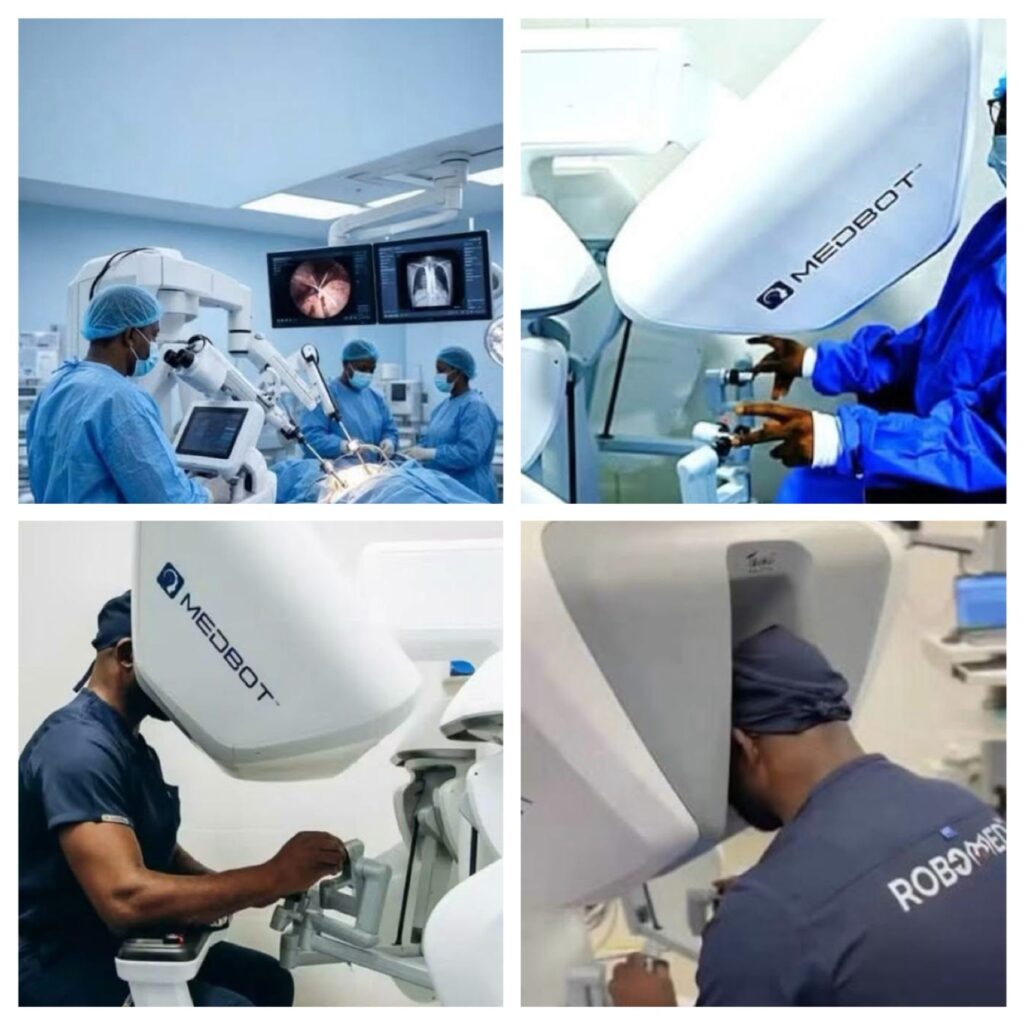
Nigeria through RCCG’s Redeemer’s Health Village makes surgical history as Doctors successfully operated on a patient in Abuja from Ogun State — nearly 500 kilometres away — in what participating institutions describe as West Africa’s first tele-robotic surgery.
Nigeria has recorded a major breakthrough in healthcare technology after surgeons in Ogun State remotely performed a complex kidney operation on a patient in Abuja — about 500 kilometres away.
The procedure, described by the participating institutions as West Africa’s first tele-robotic surgery, was carried out on Saturday, September 19, through a collaboration involving Redeemer’s Health Village (RHV), RoboMed Global and Nisa Premier Hospital, Abuja.
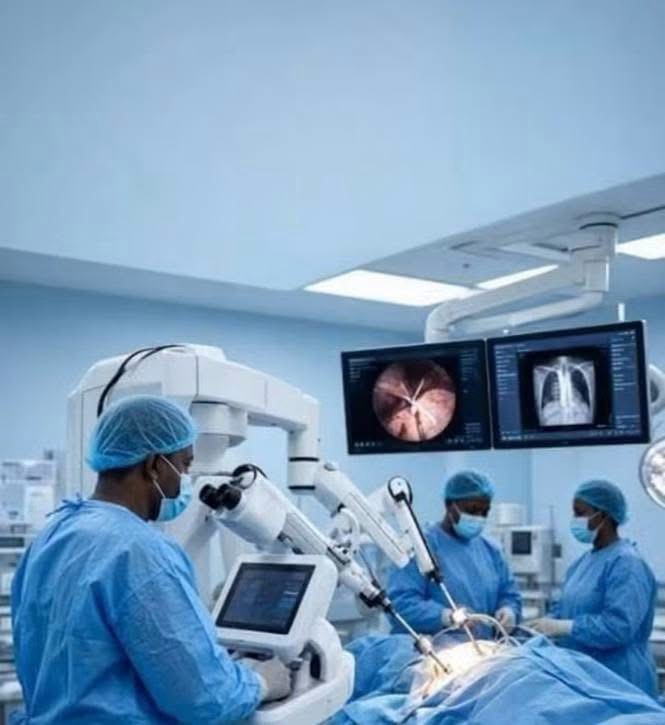
The operation was a robot-assisted right radical nephrectomy, a major surgical procedure involving the removal of a kidney affected by a cancerous tumour.
What makes the development particularly remarkable is that the surgeon was not physically present in Abuja.
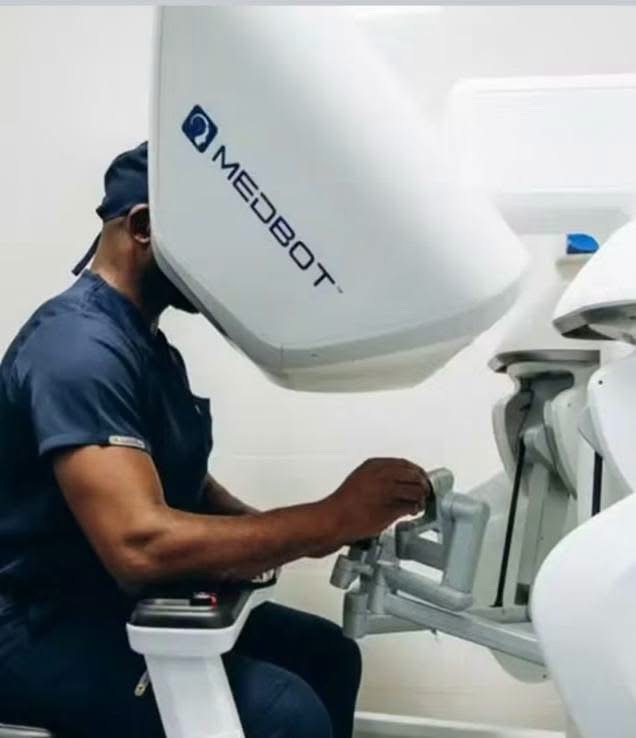
Instead, the surgical team operated a robotic system remotely from Redeemer’s Health Village in Ogun State, while the patient remained at Nisa Premier Hospital in Abuja. The technology transmitted the surgeon’s movements to the robotic equipment at the patient’s location in real time.
The procedure was led by Professor Obi Ekwenna-Davis, a professor of urology and transplantation and co-founder of RoboMed Global. Reports on the operation said the surgery lasted approximately three hours and was completed successfully.
Beyond the surgery itself, the development highlights the potential of tele-robotic technology to reduce the limitations created by geographical distance.
In a country where highly specialised medical expertise is concentrated in certain locations, remote surgery could eventually make it possible for patients in other cities or regions to access specialist surgeons without travelling long distances.
It could also open new possibilities for connecting Nigerian patients with specialists elsewhere through advanced robotic systems and secure communications infrastructure.
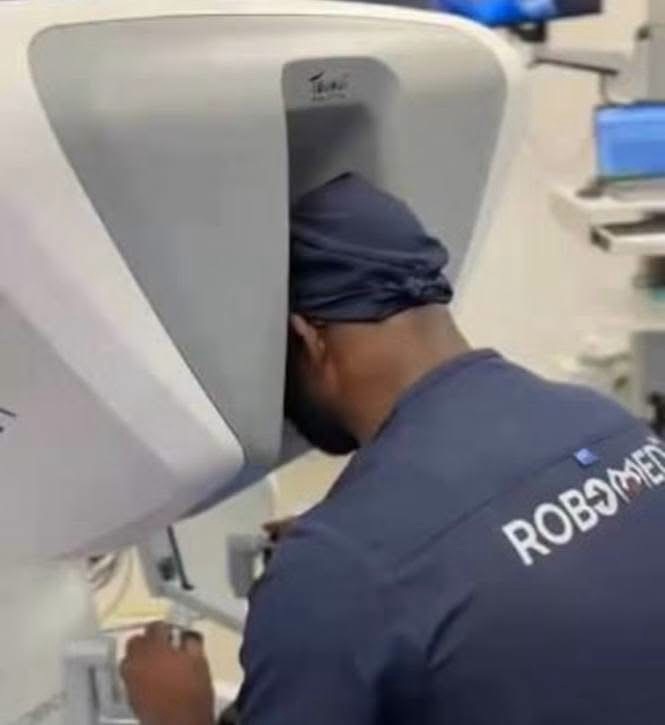
RHV has celebrated the procedure as a landmark moment in the advancement of technology-driven healthcare in Nigeria.
The achievement also involved medical, technical and operations teams from the participating organisations, whose coordination was critical to the success of such a complex procedure.
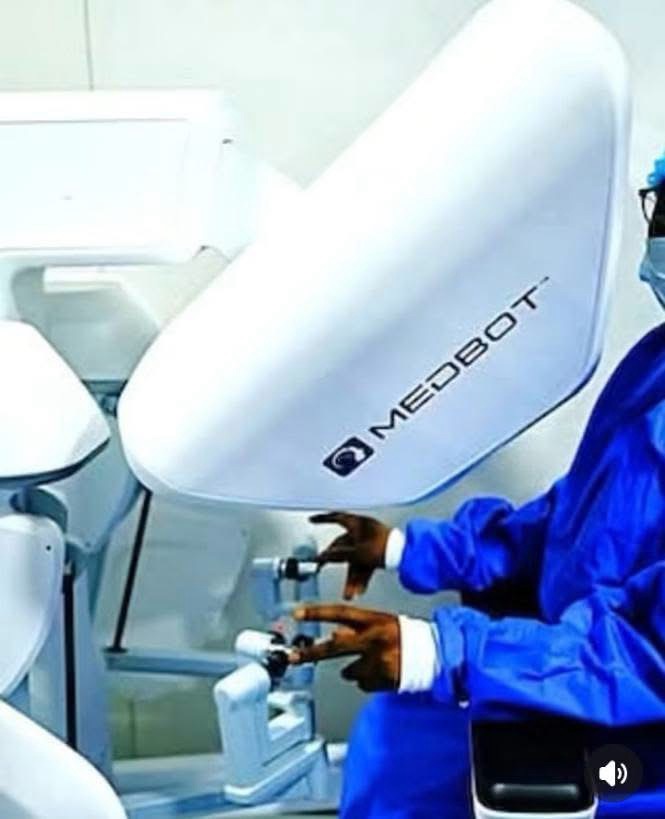
For Nigeria’s healthcare sector, the development represents more than a technological demonstration. It raises a bigger question about what becomes possible when medical expertise, robotics, telecommunications and local healthcare infrastructure are brought together.
A surgeon in Ogun State. A patient in Abuja. One operation — connected across hundreds of kilometres.
The era of distance-free specialist surgery may have taken a significant step forward in Nigeria.