Supreme Court Verdict Candidates Not In Party Registers Risk Disqualification — INEC
The Independent National Electoral Commission (INEC) has warned that political parties whose candidates’ names were not included in the membership registers submitted to the commission risk disqualification from the 2027 general elections.
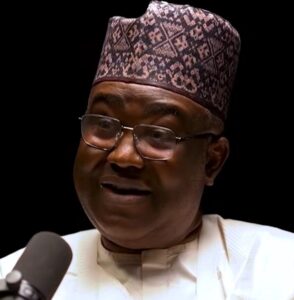
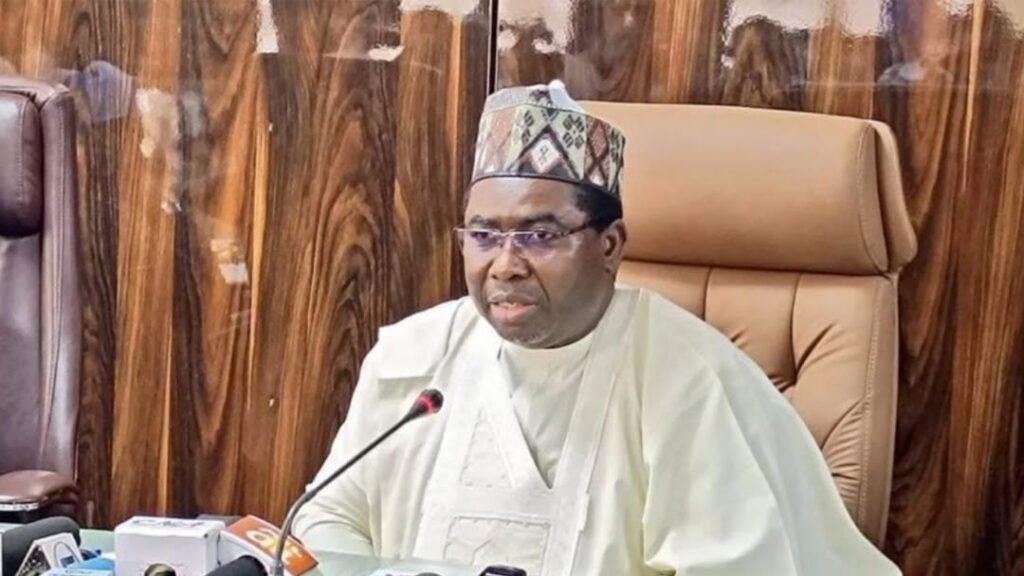
INEC National Commissioner and Chairman of the Information and Voter Education Committee, Mohammed Kudu Haruna, disclosed this during an appearance on Trust TV’s Daily Politics programme on Wednesday evening.
Haruna said the commission would take a final decision on the implications of the Supreme Court judgment for the affected political parties by next week, noting that candidates and members of the public were anxious to know how the ruling would affect their participation in the elections.
“Hopefully, we will definitely meet next week to be able to take a decision on this, because I know a lot of people are anxious, not just candidates themselves; even the public are anxious. They want to know, given the way the Supreme Court has strengthened our hands,” he said.
The Supreme Court, in its September 24, 2026 judgment in INEC v. Zenith Labour Party, affirmed Sections 77(5)–(7) of the Electoral Act 2026 and upheld INEC’s revised timetable for the 2027 general elections.
According to Haruna, the judgment affirmed the commission’s position that political parties must submit their membership registers at least three weeks before conducting their primaries.
He stressed that affected parties would not be permitted to substitute candidates to circumvent the legal requirements, adding that no political party should benefit from its own violation of the law.
Responding to concerns that affected parties might attempt to replace their candidates with new nominees, Haruna said it was too late for such a move.
“It’s too late to do anything. The party won’t even be able to contest. It’s like you committed an offence and then you come and benefit from it. You remember cases that we had in Zamfara, you remember Plateau? Same thing,” he said.
He added that allowing parties to substitute candidates under such circumstances would amount to rewarding non-compliance with the law.
“The parties, because they did the wrong thing, they thought they could now steal through the candidates. And the law was very clear. Once you do that kind of thing, you cannot benefit from it. You are benefiting from it if you are able to substitute a candidate,” Haruna said.
He further warned that some political parties could be prevented from fielding candidates for certain elective positions, including governorship and State House of Assembly seats, if their nominees were not registered members of the parties at the time they contested for their tickets.
“So, what it means is that when we look at the law and take a decision, some parties may not be able to field even governorship candidates, or all the candidates, all the way to the Houses of Assembly, if their names are not on the party register and they were not members of the party as at the time they contested for those tickets,” he said.
Haruna explained that the commission was taking its time to reach a decision because it needed to obtain the Certified True Copy of the Supreme Court judgment and secure the necessary legal advice.
He said INEC had to exercise caution because there had been instances in which individuals presented forged court judgments, including documents purported to be decisions of the Supreme Court.
“You can’t be too careful with these things because even when you see copies and they tell you it’s CTC, it may be forged. We’ve seen instances where people have even gone, have the audacity to forge a Supreme Court judgment. So we have to be very careful,” he said.
INEC Chairman, Professor Joash Ojo Amupitan, had earlier disclosed on Tuesday that the commission had investigated and resolved 112 formal complaints relating to unlawful withdrawal and substitution of candidates, except cases pending before the courts.
Amupitan also said the commission received the Certified True Copy of the Supreme Court judgment on Tuesday morning.
Under the revised electoral timetable, the presidential and National Assembly elections are scheduled for Saturday, January 16, 2027, while governorship and State House of Assembly elections will hold on Saturday, February 6, 2027.
Political party primaries were scheduled to take place between April 23 and May 30, 2026, while the submission of candidates’ nominations was fixed for June 27 to July 11, 2026.